

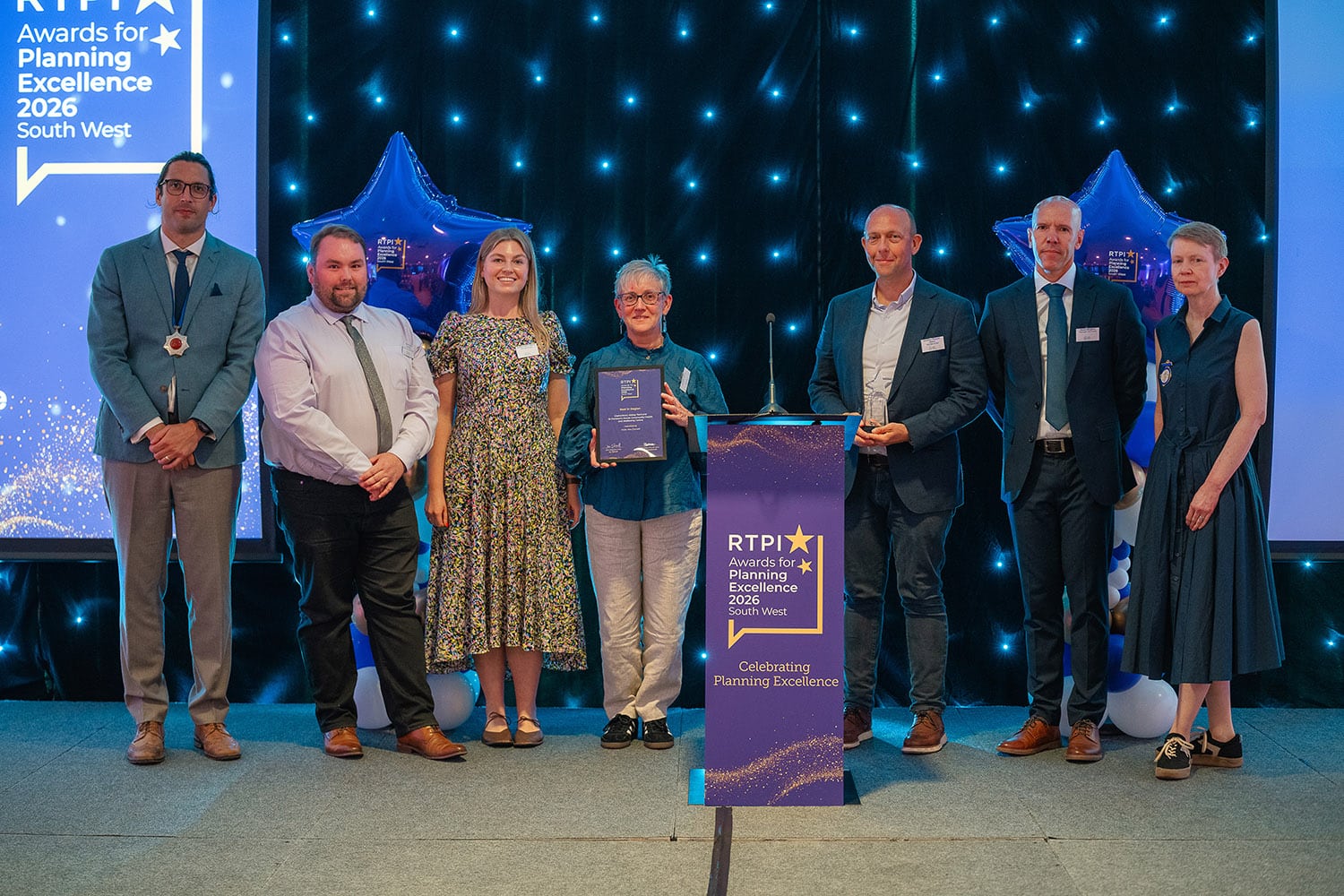
 As a regional winner, the project will now progress to the national stage of the RTPI Awards for Planning Excellence. High-scoring winning projects from across the RTPI’s nations and regions are automatically shortlisted for the national awards, where they are judged alongside the strongest projects from across the UK. The national finalists will be announced on 7 October, with the winners honoured at the RTPI Awards for Planning Excellence ceremony in London on 3 December.
The award celebrates an outstanding example of heritage-led regeneration, recognising the transformation of Glastonbury Abbey Yard alongside the creation of the new St Dunstan’s House Community Health & Wellbeing Centre. Entered by Mott MacDonald, who acted as the planning agent during the early stages of the project, the award recognises the power of collaborative planning in delivering lasting social, environmental and economic benefits for the people of Glastonbury.
Although the Abbey Yard public realm improvements and the refurbishment of St Dunstan’s House were delivered through separate design teams, the two projects evolved in parallel through close collaboration between consultants, planners, heritage specialists, Somerset Council and Glastonbury Town Council. This integrated approach ensured that each scheme complemented the other, creating a coherent vision for one of the town’s most historically significant locations.
Creating a community health and wellbeing centre
For Glastonbury Town Council, St Dunstan’s House has always been far more than the refurbishment of a listed building. The ambition was to create a welcoming, accessible and sustainable Community Health & Wellbeing Centre that will continue to serve local people for generations while respecting the building’s remarkable heritage.
Throughout the design process, heritage considerations remained central to every decision. Working closely with planning officers and conservation specialists, the project team sought innovative solutions that balanced the preservation of the building’s historic character with the practical requirements of a modern healthcare and wellbeing facility.
Planning that improved the final design
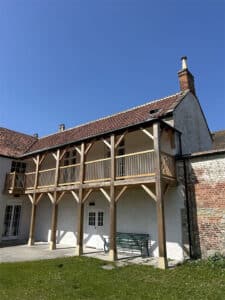
This collaborative planning process enabled a number of significant improvements that might otherwise not have been possible. A sensitively designed new principal entrance now provides a welcoming and legible arrival point, while the introduction of a lift has made the building fully accessible for the first time in its history. A replacement balcony and numerous carefully considered internal alterations have enhanced the functionality of the building while respecting its historic fabric.
One particularly successful outcome emerged directly from discussions with the local planning authority. During the design process, an internal historic wall had initially been identified for removal to create a larger consultation room. Through constructive dialogue with planners, it was agreed that retaining the wall would better preserve the building’s historic character. Rather than becoming a limitation, the retained space has become a quiet and private counselling room overlooking the peaceful grounds of Glastonbury Abbey, creating one of the most valued spaces within the completed building. It stands as an excellent example of how collaborative planning can improve both heritage conservation and the quality of modern community facilities.
Heritage, sustainability and accessibility
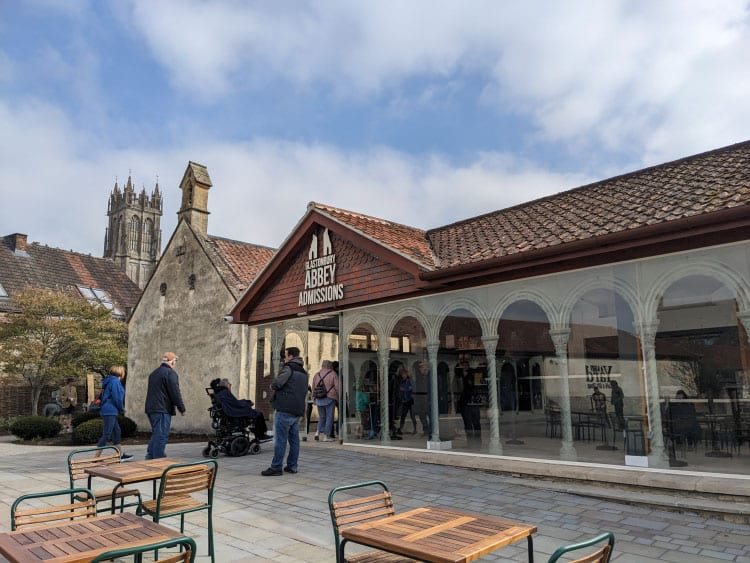
Environmental sustainability formed another key element of the project. Landscape proposals for both St Dunstan’s House and Abbey Yard were developed together to create a cohesive setting that enhances biodiversity while respecting the internationally important heritage landscape surrounding Glastonbury Abbey. Particular care was taken to protect local ecology, including the rare bat species known to inhabit both sites. Sustainable drainage measures, sensitive planting and the reuse of historic materials further demonstrate the project’s commitment to environmental responsibility.
Together, the two schemes have transformed the experience of arriving at Glastonbury Abbey while creating a high-quality health and wellbeing facility that is accessible, welcoming and deeply rooted in its historic surroundings.
Project Lead reflects on the award
Conor Ogilvie-Davidson, Town Clerk and Project Lead for St Dunstan’s House Community Health & Wellbeing Centre, said:
“This award is a tremendous achievement and reflects the dedication, expertise and collaboration of everyone involved throughout the project. We are incredibly proud that St Dunstan’s House forms part of a wider regeneration project that has been recognised by the Royal Town Planning Institute for planning excellence.
“From the outset, our ambition was to preserve the special character of this important historic building while creating a community facility that is welcoming, inclusive and accessible to everyone. Achieving those ambitions required genuine partnership working between Glastonbury Town Council, our professional team, planning officers, conservation specialists and our many stakeholders.
“The planning process itself played a hugely positive role in shaping the final design. The retention of the historic internal wall, which now creates a beautiful private counselling room overlooking the Abbey grounds, perfectly demonstrates how thoughtful planning can lead to better outcomes than those first imagined. Likewise, the introduction of a new entrance, lift and improved circulation has transformed the accessibility of the building while respecting its historic significance.
“This project shows what can be achieved when heritage, accessibility, sustainability and community wellbeing are considered together. We hope St Dunstan’s House will continue serving the people of Glastonbury for many decades to come and that it stands as an example of how historic buildings can be successfully adapted for modern community use.”
 A collaborative achievement
Glastonbury Town Council would like to thank everyone who contributed to the success of the project, including Mott MacDonald for their early planning support, together with the wider professional team led by O2i Architects. The project was delivered with Dowlas Property Group as Project Managers, MODE Consult as Quantity Surveyors, SEED Landscape Design as Landscape Architects, Houghton Greenlees as Mechanical and Electrical Consulting Engineers, Morgan Structural as Structural and Civil Consulting Engineers, Qualitas Compliance as Fire Strategy Consultants, TCB as Principal Designer and CDM Consultants, Total Building Control as Approved Inspectors, and Johns Associates as Ecological Consultants.
The Council also wishes to acknowledge the positive and collaborative working relationship developed with Somerset Council’s planning and conservation officers throughout the project. Their constructive engagement helped shape a scheme that demonstrates how heritage conservation and contemporary community needs can be successfully brought together.
Celebrating planning excellence
The RTPI South West Award for Planning Excellence recognises projects that exemplify outstanding planning practice and deliver meaningful benefits to communities. The success of Glastonbury Abbey Yard and St Dunstan’s House Community Health & Wellbeing Centre highlights the importance of collaboration in creating places that celebrate heritage, improve wellbeing and provide lasting value for future generations.
Further information about the RTPI South West Awards for Planning Excellence can be found on the RTPI website.
Photography from the awards ceremony is available courtesy of Keynote Photography.

