
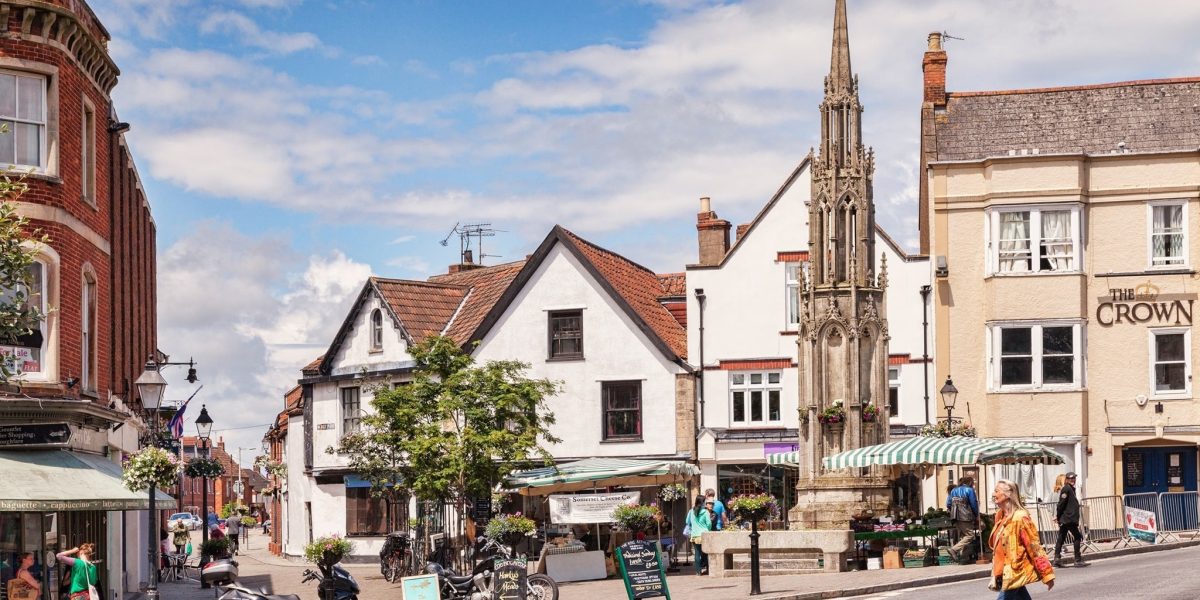
Standing proudly at the heart of Glastonbury’s Market Place, the historic Market Cross is one of the town’s most recognisable landmarks and an important part of its architectural heritage. The current structure was erected in 1846, designed by noted architect Benjamin Ferrey in the Perpendicular Gothic style, replacing an earlier 16th-century cross that had fallen into disrepair and was demolished in the early 1800s. Built from Bath stone, the Grade II listed monument features an octagonal base, intricate openwork tracery, tabernacles, finials, and a wrought-iron weathervane, making it both a historic focal point and a striking symbol of Glastonbury’s long-standing market tradition. Historic England describes it as an “extremely important group” within the surrounding Market Place streetscape.
Recent inspections identified loose masonry that could pose a risk of injury, making these essential repairs necessary to preserve one of the town’s cherished landmarks while ensuring public safety. The scaffolding is expected to remain in place for approximately eight to ten weeks while important repairs and improvements are completed.
To help improve the appearance of the site during this period, Abbey Scaffolding is painting the corrugated protective shielding blue and our close friends at the Mural Trail are organising for artists to paint Glastonbury-based designs on the sheets in time for Beltane on Friday, 1 May.
Glastonbury Town Council would like to thank residents, visitors, and the wider community for their patience and understanding while these necessary works are undertaken. The Council also appreciates the community’s positive engagement and assistance in helping improve the appearance of the scaffolding and protective screening during the repair period.
These temporary measures are an important step in safeguarding the future of the Market Cross, ensuring it can continue to stand proudly at the heart of Glastonbury for years to come.
Update – Structural Assessment Completed
We would like to thank residents and visitors for their continued patience while the Market Cross remains surrounded by scaffolding.
A structural engineer has now completed a detailed assessment of the Market Cross, and the resulting report has been shared with our specialist stonemason. As the Market Cross is a Grade II listed structure, we are also consulting closely with Somerset Council’s Conservation Officer to ensure that the necessary repair works are carried out in an appropriate and sensitive manner.
At this stage, we are unable to provide a timescale for when the scaffolding will be removed, as this will depend on agreeing the scope of works required and the necessary conservation approvals. We appreciate that the scaffolding has been in place for some time and will continue to keep the community informed as further progress is made.

